I have a new TV show up and running,Let's Talk", running weekly on Stratos TV, 5pm Mondays. Haven't had time yet to put a clip from it up on YouTube but here's a chunk of script I used in the show. It's something I really wanted to say...
After yet another horrendous car crash last weekend, killing two teenage boys, maiming two more and also killing a man who had the terrible luck to be in the way, all of us must be asking ourselves if there isn’t more we can do to stop this happening so often.
It was, as usual, all about booze, speed and bad driving and the kids who died were just 16 and 17. The man in the other car, who was 45, was on his way home after work to his wife and three kids.
Once again we’ve seen the ripped up cars at the roadside, so totalled they look like a monster has torn them apart.
We’ve seen pictures of shocked relatives clinging to each other. We’ve heard again how it looked like a war zone.
And a police sergeant told a reporter how he’d had to knock on the doors of four separate sets of parents and the wife of a dead man in the middle of the night, to deliver the bad news.
A friend of mine who was a police officer once told me how that feels – to stand at a door with your fist up, knuckles ready to go, hearing calm and happy sounds or peaceful silence inside and knowing that in just a moment you will blow these people’s lives apart.
We still don’t have it right, it seems, when it comes to tragedies like this. The license age is still too low, the drinking age is still too low, driving skills aren’t good, and of course you can never underestimate the desire in teenagers for the sheer thrill of speed, no matter how often parents say ‘drive carefully’.
Apparently there was a beer box and alcopop cans littering the scene of the last disaster… and that’s something we can at least try to get right. In California they have a simple rule about alcohol and vehicles. Having any drink inside the car at all, whether opened or unopened, is forbidden. If you’re carrying booze it has be out of reach, locked in the rear compartment.
We can’t tell what happened in that car at Waihi but over and over again we hear of accidents where booze was being knocked back even as drivers and passengers rode to oblivion. We can’t stop people drinking either before they get behind the wheel.
But at least we could do more to discourage anyone from drinking while the car’s in motion, and thus cut down the yahooing and the egging on. It’s such a simple idea. And wouldn’t it be worth if it at least it prevents just one more family from hearing that knock on the door after midnight?
Friday, January 28, 2011

Tuesday, December 14, 2010
Join the chorus
I've been writing a piece on Twitter for people who aren't on Twitter. Here it is...
When I hear this summer’s tuis going squawk, rasp and whistle, it seems like Twitter has somehow taken over my garden. But when the mini-blog site was invented back in 2006 its name was merely “twttr” – a five-letter code partly inspired by the picture-sharing website, Flickr.
An American called Jack Dorsey and some friends were messing about with the idea of being able to contact small groups of friends via SMS messaging. It was only when they spotted the global potential of their idea that Twitter, the brand, came to life complete with its little bird logo.
Five years on the avian chorus is deafening, with tweets breaking out all across the virtual arena that some call the Twitterverse.
Twitter is smaller than Facebook and YouTube but is still enormous at around 100 million users. Million, schmillion… it’s just one slice of the vast social-media pie, but more and more of us are taking flight there.
Many will start out like me. You open a free account (my name there is @lindseyoutloud) at www.twitter.com, do one cautious tweet, find a few people to ‘follow’, then just sit back and watch. Once the world starts streaming in you begin to ‘get it’. Soon you too will be itching to tweet – using no more than 140 characters at a time, please. It’s interesting how inventive you can become.
Unbelievers will tell you that reading celebrity prattle is a big yawn. But tick the right ‘follow’ boxes and you’ll be well entertained. By following Vanity Fair, for instance, I can get early alerts to top story links on that magazine’s website so I can read tasty pieces way before the actual issue gets here.
I follow comedians, writers, politicians, monks, big thinkers, artists and activists – and a bunch of friends old and new. It’s great for new thoughts and ideas and video links and, as with Facebook, you can direct-message your contacts as well.
Aucklander Linda Coles, of Blue Banana Ltd, is making her living training business people in how to build relationships online. “All that stuff about what people are having for breakfast is just boring,” she says. “It’s really about letting people you want to do business with know you exist. “ Linking Twitter with business site LinkedIn, she’s constantly interacting with existing customers and new prospects and sees it as an essential business tool.
For the rest of us, it offers fleeting fun as often as you want. And here’s an unexpected upside – if you become a tweeter you’ll find yourself mostly amongst grownups – teenagers don’t like it much. One recent survey found only four percent of Twitter users are under 18. Average age: a nicely mellow 31. n
* This article appears in the Jan issue of Next magazine.
When I hear this summer’s tuis going squawk, rasp and whistle, it seems like Twitter has somehow taken over my garden. But when the mini-blog site was invented back in 2006 its name was merely “twttr” – a five-letter code partly inspired by the picture-sharing website, Flickr.
An American called Jack Dorsey and some friends were messing about with the idea of being able to contact small groups of friends via SMS messaging. It was only when they spotted the global potential of their idea that Twitter, the brand, came to life complete with its little bird logo.
Five years on the avian chorus is deafening, with tweets breaking out all across the virtual arena that some call the Twitterverse.
Twitter is smaller than Facebook and YouTube but is still enormous at around 100 million users. Million, schmillion… it’s just one slice of the vast social-media pie, but more and more of us are taking flight there.
Many will start out like me. You open a free account (my name there is @lindseyoutloud) at www.twitter.com, do one cautious tweet, find a few people to ‘follow’, then just sit back and watch. Once the world starts streaming in you begin to ‘get it’. Soon you too will be itching to tweet – using no more than 140 characters at a time, please. It’s interesting how inventive you can become.
Unbelievers will tell you that reading celebrity prattle is a big yawn. But tick the right ‘follow’ boxes and you’ll be well entertained. By following Vanity Fair, for instance, I can get early alerts to top story links on that magazine’s website so I can read tasty pieces way before the actual issue gets here.
I follow comedians, writers, politicians, monks, big thinkers, artists and activists – and a bunch of friends old and new. It’s great for new thoughts and ideas and video links and, as with Facebook, you can direct-message your contacts as well.
Aucklander Linda Coles, of Blue Banana Ltd, is making her living training business people in how to build relationships online. “All that stuff about what people are having for breakfast is just boring,” she says. “It’s really about letting people you want to do business with know you exist. “ Linking Twitter with business site LinkedIn, she’s constantly interacting with existing customers and new prospects and sees it as an essential business tool.
For the rest of us, it offers fleeting fun as often as you want. And here’s an unexpected upside – if you become a tweeter you’ll find yourself mostly amongst grownups – teenagers don’t like it much. One recent survey found only four percent of Twitter users are under 18. Average age: a nicely mellow 31. n
* This article appears in the Jan issue of Next magazine.
Wednesday, December 1, 2010
Office affairs - oh, the angst!
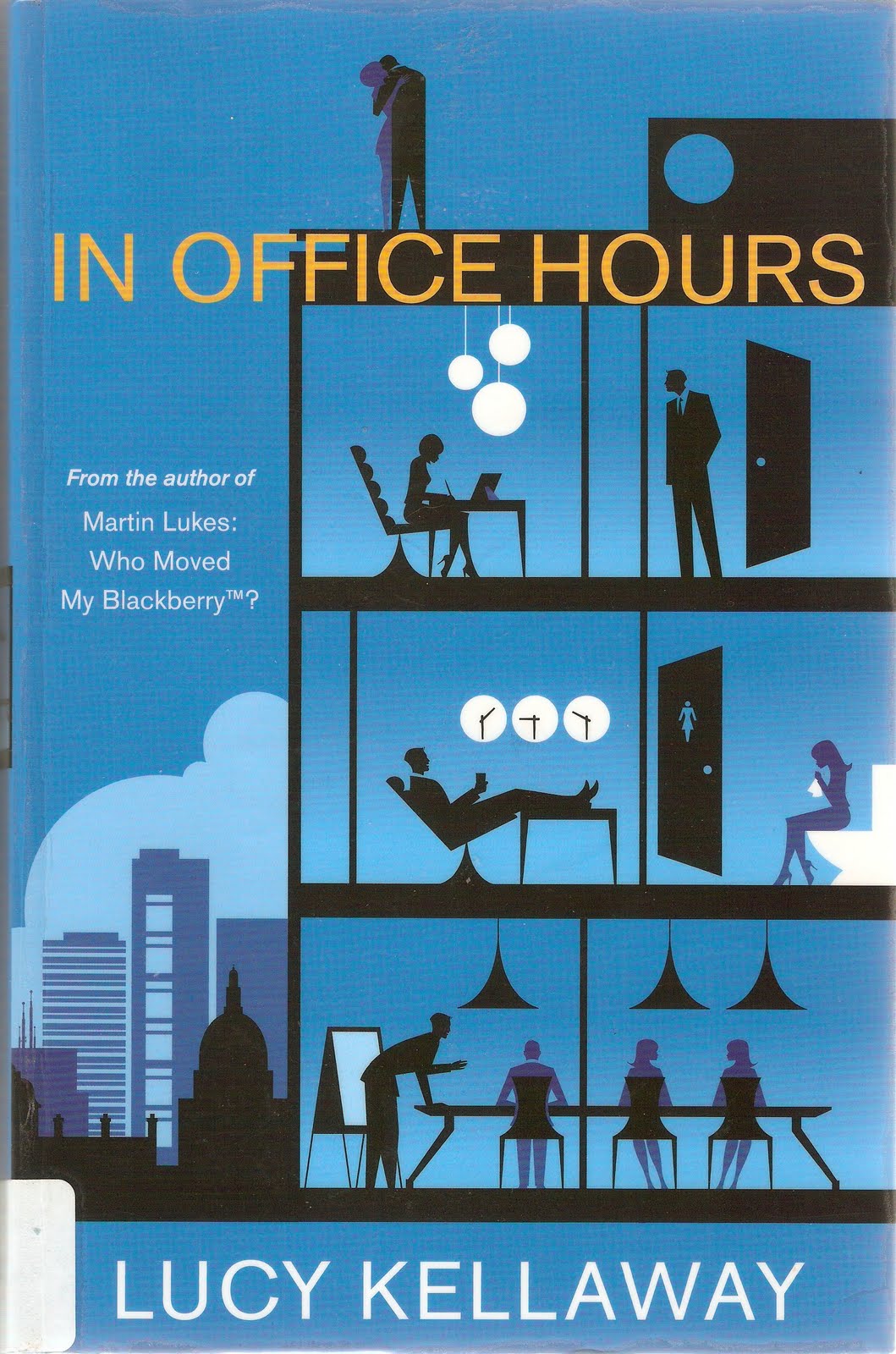
Lucy Kellaway is a Financial Times columnist. I first got to know her via her voice in the witty little pieces about business life that she records for the BBC.
Turns out she's a good novelist as well. I just read her In Office Hours and can highly recommend it for a holiday read. Or a curled-up-on-the- couch read. You might label it 'chick lit' if it wasn't Lucy at the helm, but she overcomes what could be a standard office-affairs theme by being really dry, witty and droll...in her inimitable manner. In Office Hours is office politics writ large, set against the backdrop of London City machinations, the GFC, and corporate and banking greed. Ironically - for she must have written it before the Gulf oil spill and the tarnishing of BP's reputation - it is set within the head office of a rapacious oil company that she tags Atlantic Energy.
She has two main characters who are (slightly annoyingly) called Stella and Bella, but you quickly get to grips with their linked but separate dramas.
Stella is the senior exec appalled to find herself having it off with a junior, many-years-younger male assistant; Bella is the struggling junior office assistant and solo mum feeling the tug of illicit excitement with her male, much-older married boss. Kellaway niftily exposes the different tensions and attitudes evoked by these unequal relationships.
It's agonising and funny, all at the same time, and accompanied by the churning of feverish emails and texts. Which is of course the modern, and often hazardous way.
It also points out how damn annoying Microsoft can be. There's Stella, struggling to write an emotionally laden email that's ripping her heart out, when up pops a smarmy on-screen message from the 'assistant' - "it looks like you're trying to write a letter. Would you like help?"
Thursday, November 18, 2010
Stick it to us

The Post-it note is 30 years old this year. Can we imagine life without them? Ten years ago someone visited my office and laughed because I had yellow reminder notes to myself stuck around the edge of my monitor. "Post-it notes?" she jeered. "Use the Stickies tool on your Mac!" I do, but I still like scribbling and sticking. Newsweek magazine has a vivid collection of the crazy and vivid and political and sentimental things people have done with Post-it notes over the years.
http://www.newsweek.com/photo/2010/11/16/how-post-it-notes-have-stuck-to-our-history-and-culture.html
As a for instance, I love this Korean bridal car - a mass of flapping yellow. Apparently they started out yellow because when 3M scientists were messing about with a new adhesive they happened to have some yellow scrap paper in the office. The idea languished for a while until one of the guys, who sang in his church choir, realised a tag of the sticky paper they'd been playing with would be a great way to keep his place in the hymn book. Small idea. Big business.
Wednesday, November 17, 2010
The online world of pretty

The web started out as a realm for geeks. The content was all about business, computer science, numbers and graphs. But something more beguiling flooded in when artists and dreamers began to play. While hard-sell merchants are screaming their names elsewhere on the web, the appeal of pretty sites is partly due to the fact that nobody’s shouting at you.
Lovers of all things beautiful tend to hope you’re not so much interested in them as the style they espouse. Sometimes you can’t even find their real names.
Take, for instance, the mysteriously labelled Gypsy Purple, who loves all things French and can be found at http://gypsypurple.blogspot.com Her opulent blog is a bit of a gypsy tea-room, overflowing with romantic, retro and nostalgic art of all kinds. The elegant white Swedish dining room above is from her blog.
If it’s the colour grey (or ‘gray’ if you’re American) that spins your wheels, see www.aperfectgray.com, a blog full to the brim with lovely charcoal, dove and pearl-toned goodies. Its creator rhapsodises that life has “four phenomenal goodnesses; décor, art, antiques and style – and this girl’s search for that one perfect gray wall colour.”
Needlework fans should cruise http://karenruane.blogspot.com, where there are oodles of embroidery pieces to admire, mostly in white on frosty white. Karen’s gorgeously detailed pieces come with lots of helpful chat about how to be an expert with needle and thread.
No such colour blindness is exhibited by an English architect who rolls out an almost daily post of all things bright and beautiful. Blogging at http://ijeomabyijeoma.blogspot.com, she recently displayed the interiors of Kim Kardashian’s plush home (remarkably restrained for a Kardashian) and the site is always full of international interiors to die for.
At http://adiaryoflovely.blogspot.com you can find Helena, who has about 1000 “lovely people” instead of “fans”. Her blog is awash with cool clothes and design.
Some style bloggers love to pair up words to make cute, double-barrelled names for their sites. Already taken – just in case you’ve been musing on such a move – are Lilac and Grey, Velvet and Linen, Linen and Lavender, and Chi Chi and Luxe, all of them bursting with sweetness and colour.
But there are no fluffy words at www.cleverbastards.co.nz, where you can browse and buy arty stuff made right here. On show is the work of huge talents from all over New Zealand. The idea in setting up the site (say the six people who run it) was to give you a place to purchase something from a creative Kiwi and also “get an idea how it was made and what the hell made them do it in the first place”. Clever.
* This piece appears in my Webmistress column, Next magazine, Dec 2010.
Monday, November 15, 2010
A different look at going back to the future
Was just browsing around in Slideshare and came across this beguiling piece of work - setting romantic visionary images against the reality of today's world. This sort of thing is why I love the internet.
I'd love to know more about these images, but the person who posted is from Ecuador, and being horribly monolingual I can't ask him. But the pictures speak for themselves.
Yesterday’s future
View more presentations from Nicolás Svistoonoff.
I'd love to know more about these images, but the person who posted is from Ecuador, and being horribly monolingual I can't ask him. But the pictures speak for themselves.
Saturday, November 6, 2010
Skimming the shallows

Have you noticed lately that your ability to concentrate has dropped off? I have, especially when it comes to reading. And I'm an old-school, hard-core kind of reader, so it's a bit weird. I'm finding that when I bring my customary stack of three or four books home from the library, I'm then reading only one or two of them. I have little patience for books that don't grab me instantly, or magazine stories that go on too long.
I've worked on newspapers and used to be a cover-to-cover kind of reader. These days I flip, scanning headlines, and only stop if a story looks sufficiently enticing. Trouble is, of course, most newspaper stories are already at least 12 or 24 hours old and we know the news already from a thousand other sources. Which is why, of course, newspapers are having such a hard time of it.
But according to author Nicholas Carr, there's more to it than stale news. He reckons that the internet, and all the other fast-moving media we're saturated with, is forcing us into too much multi-tasking, making us distracted and turning our brains to mush. Well, he's too cautious to put it quite like that, but it's the general thrust of his book, The Shallows: How the internet is changing the way we think, read and remember. Carr gathers lots of scholarly evidence to show that even as we're enjoying the many excellent things the web has to offer, it is rewiring our brains, flattening our brilliance, reducing our capacity for deep, meditative thought - and suppressing human empathy and compassion.
He writes, "There is no Sleepy Hollow on the Internet, no peaceful spot where contemplativeness can work its resorative magic. There is only the endless, mesmerizing buzz of the urban street."
Oops. Just as well I've taken a quiet walk by the sea today. But then I did come home to get back to my keyboard and write this blog, send three emails and post videos on two websites, all time thinking of my next media projects as well. And it's Sunday, supposedly the day of rest. Perhaps Mr Carr is right. Sigh. Time to switch off the laptop and firmly close the office door.
Subscribe to:
Posts (Atom)